Kokeshi Doll Watercolor Illustrations Review
I recently opened a new file for a boutique tea brand that wanted to launch a limited-edition spring collection. The client’s brief was specific: they needed visuals that felt authentic, handcrafted, and deeply rooted in Japanese aesthetics without looking generic or overused. That is when I came across the Watercolor Clipart Japanise Doll Kokeshi. As a designer who constantly sifts through thousands of assets on the creative marketplace, my first impression determines whether an element makes it into a real project or stays in the trash bin. This particular set immediately stood out for its soft texture and cultural specificity.
First Impressions and Visual Mood
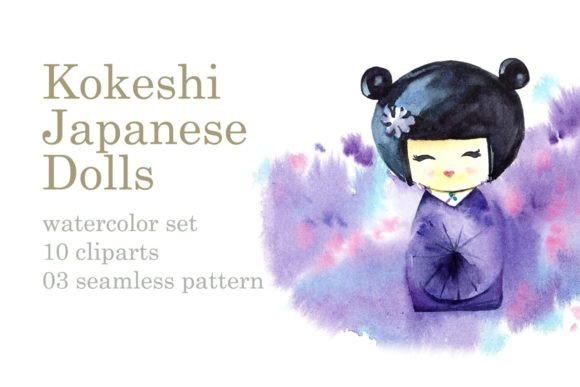
The moment I dragged the Watercolor Clipart Japanise Doll Kokeshi into my workspace, the mood shifted instantly. Unlike flat vector graphics that can feel sterile, these illustrations carry the weight of a genuine brushstroke. The watercolor washes bleed naturally at the edges, creating a sense of organic movement that feels perfect for a handmade business. The color palette is restrained yet warm, avoiding the neon saturation often found in lower-quality digital products. For a brand identity aiming to evoke tradition and serenity, this asset provides an immediate emotional hook. It suggests care, history, and artistry, which are crucial for small business branding in the wellness and lifestyle sectors.
Real-World Application in Branding and Packaging
In a professional setting, versatility is key. I tested how the Watercolor Clipart Japanise Doll Kokeshi performs across various design scenarios. For packaging design, specifically for tea tins and gift boxes, the illustration works beautifully as a central motif. When scaled up, the watercolor details remain crisp enough to print on high-quality cardstock without losing definition. The softness of the art complements serif fonts and handwritten script styles, creating a sophisticated visual hierarchy that guides the consumer's eye directly to the product name.
Beyond packaging, I explored its use in marketing visuals for social media. On Instagram posts and Pinterest pins, these illustrations act as excellent focal points. They break up text-heavy layouts and add a layer of texture that stops the scroll. For a Canva template intended for bloggers or content creators, adding these Kokeshi dolls as decorative accents elevates the overall aesthetic from amateur to polished. The asset also translates well into merchandise; imagine a tote bag or a t-shirt design where the doll is placed centrally with minimal typography. The result is a wearable piece of art that appeals to customers who appreciate unique, culturally inspired fashion.
Strategic Placement and Layout Considerations
While the Watercolor Clipart Japanise Doll Kokeshi is visually striking, knowing where to place it is just as important as selecting it. These illustrations shine in large layout areas where they can serve as hero graphics. In editorial design, such as magazine spreads or blog headers, they provide a strong visual anchor. They are also ideal for themed collections, where multiple dolls can be arranged to create a pattern or a collage effect for wallpaper or fabric prints. For sublimation design projects, the vibrant yet blended colors ensure that the final printed product looks rich and dimensional.
However, there are contexts where caution is required. Due to the intricate nature of watercolor textures, using these assets in very small sizes can cause them to blur or lose their charm. In crowded layouts with heavy backgrounds, the delicate lines of the Kokeshi dolls might get lost, reducing readability and visual impact. If you are working on minimalist branding or professional corporate materials that demand stark clean lines, this style might feel too busy or informal. It is essential to maintain sufficient negative space around the illustration to let it breathe and ensure it does not compete with critical information like pricing or call-to-action buttons.
Technical Checks for Commercial Use
Before finalizing any client project, I always run a series of technical checks. First, I verify the commercial license to ensure I have the right to use the Watercolor Clipart Japanise Doll Kokeshi for resale items like print-on-demand products or Etsy listings. Next, I inspect the file formats. High-resolution PNG designs with transparent backgrounds are non-negotiable for overlaying onto product mockups. If SVG design files are included, I test their editability to see if I can adjust colors to match the client's brand guidelines perfectly.
I also perform a contrast check by placing the illustration on both light and dark backgrounds. Watercolors can sometimes struggle against dark tones if the shadows aren't deep enough, so testing ensures the design remains legible everywhere. Additionally, I preview the asset in black and white to confirm that the shapes hold up even without color, which is vital for monochrome printing options. Finally, I compare the illustration with different font pairings—serif, sans serif, and display fonts—to ensure the overall composition feels balanced and cohesive.
Impact on Professionalism and Audience Engagement
Ultimately, the decision to use the Watercolor Clipart Japanise Doll Kokeshi comes down to how it affects the perceived value of the final design. For a handmade business or a boutique product line, this graphic design asset adds a layer of authenticity that stock photography often fails to achieve. It signals to the audience that the brand values craftsmanship and cultural heritage. This emotional appeal can significantly boost audience engagement and build trust, making the brand feel more personal and relatable.
When used correctly, this illustration enhances the visual trust of a project. It moves away from generic clipart tropes and establishes a distinct brand voice. Whether you are creating a sticker design, a digital ad, or a full brand identity system, incorporating high-quality Illustrations like these can transform a standard concept into a memorable experience. For designers, marketers, and small business owners looking to stand out in a saturated market, this asset offers a powerful tool to elevate their creative work while maintaining a professional and polished finish.